Blog

Driving Lessons and Instructor Training in Kent England

Fitness to drive

Fitness to drive (90 to 94)

90
Make sure that you are fit to drive. You MUST report to the Driver and Vehicle Licensing Agency (DVLA) any health condition likely to affect your driving.
Law RTA 1988 sect 94
91
Driving when you are tired greatly increases your risk of collision. To minimise this risk

  • make sure you are fit to drive. Do not begin a journey if you are tired. Get a good night’s sleep before embarking on a long journey
  • avoid undertaking long journeys between midnight and 6 am, when natural alertness is at a minimum
  • plan your journey to take sufficient breaks. A minimum break of at least 15 minutes after every two hours of driving is recommended
  • if you feel at all sleepy, stop in a safe place. Do not stop on the hard shoulder of a motorway
  • the most effective ways to counter sleepiness are to drink, for example, two cups of caffeinated coffee and to take a short nap (at least 15 minutes)
92
Vision. You MUST be able to read a vehicle number plate, in good daylight, from a distance of 20 metres (or 20.5 metres where the old style number plate is used). If you need to wear glasses (or contact lenses) to do this, you MUST wear them at all times while driving. The police have the power to require a driver to undertake an eyesight test.
Laws RTA 1988 sect 96 & MV(DL)R reg 40 & sch 8
93
Slow down, and if necessary stop, if you are dazzled by bright sunlight.
94
At night or in poor visibility, do not use tinted glasses, lenses or visors if they restrict your vision.
Driving Lessons and Instructor Training in Kent England

What are the legal requirements for someone helping a learner to drive.

The supervising driver must:

– be at least 21 years old
– held a full driving licence for a minimum of 3 years
– meet the minimum eyesight standards
– ensure the car is in a safe and legal condition
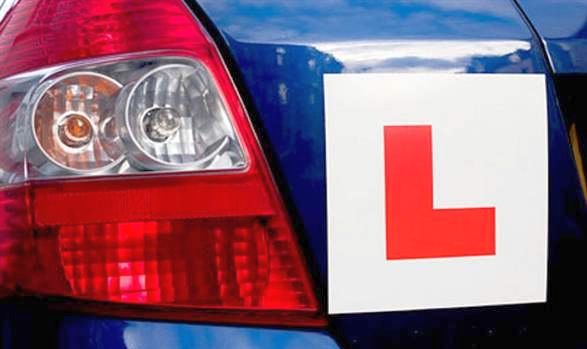
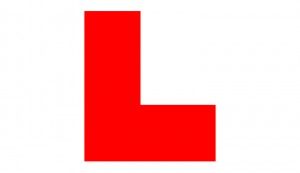
– ensure the car displays red L Plates (or D Plates in Wales) if a learner is driving
– car insurance must cover a learner driver

supervising driver learner
Driving Lessons and Instructor Training in Kent England

Pedestrians

Pedestrians (205 to 210)

205
There is a risk of pedestrians, especially children, stepping unexpectedly into the road. You should drive with the safety of children in mind at a speed suitable for the conditions.

206
Drive carefully and slowly when

  • in crowded shopping streets, Home Zones and Quiet Lanes (see Rule 218) or residential areas
  • driving past bus and tram stops; pedestrians may emerge suddenly into the road
  • passing parked vehicles, especially ice cream vans; children are more interested in ice cream than traffic and may run into the road unexpectedly
  • needing to cross a pavement or cycle track; for example, to reach or leave a driveway. Give way to pedestrians and cyclists on the pavement
  • reversing into a side road; look all around the vehicle and give way to any pedestrians who may be crossing the road
  • turning at road junctions; give way to pedestrians who are already crossing the road into which you are turning
  • the pavement is closed due to street repairs and pedestrians are directed to use the road
  • approaching pedestrians on narrow rural roads without a footway or footpath. Always slow down and be prepared to stop if necessary, giving them plenty of room as you drive past.
Rule 206: Watch out for children in busy areas

Rule 206: Watch out for children in busy areas
207
Particularly vulnerable pedestrians. These include:

  • children and older pedestrians who may not be able to judge your speed and could step into the road in front of you. At 40 mph (64 km/h) your vehicle will probably kill any pedestrians it hits. At 20 mph (32 km/h) there is only a 1 in 20 chance of the pedestrian being killed. So kill your speed
  • older pedestrians who may need more time to cross the road. Be patient and allow them to cross in their own time. Do not hurry them by revving your engine or edging forward
  • people with disabilities. People with hearing impairments may not be aware of your vehicle approaching. Those with walking difficulties require more time
  • blind or partially sighted people, who may be carrying a white cane using a guide dog. They may not be able to see you approaching
  • deafblind people who may be carrying a white cane with a red band or using a dog with a red and white harness. They may not see or hear instructions or signals.

208
Near schools. Drive slowly and be particularly aware of young cyclists and pedestrians. In some places, there may be a flashing amber signal below the ‘School’ warning sign which tells you that there may be children crossing the road ahead. Drive very slowly until you are clear of the area.

209
Drive carefully and slowly when passing a stationary bus showing a ‘School Bus’ sign as children may be getting on or off.

School bus (displayed in front or rear window of bus or coach)

School bus (displayed in front or rear window of bus or coach)
​210
You MUST stop when a school crossing patrol shows a ‘Stop for children’ sign 
Driving Lessons and Instructor Training in Kent England

Emergency and Incident Support vehicles

Emergency and Incident Support vehicle. You should look and listen for ambulances, fire engines, police, doctors or other emergency vehicles using flashing blue, red or green lights and sirens or flashing headlights, or Highways Agency Traffic Officer and Incident Support vehicles using flashing amber lights. When one approaches do not panic. Consider the route of such a vehicle and take appropriate action to let it pass, while complying with all traffic signs. If necessary, pull to the side of the road and stop, but try to avoid stopping before the brow of a hill, a bend or narrow section of road. Do not endanger yourself, other road users or pedestrians and avoid mounting the kerb. Do not brake harshly on approach to a junction or roundabout, as a following vehicle may not have the same view as you.