Well done David for passing your driving test today at folkestone test centre 🙂
Blog
FOG LIGHTS
Before entering fog check your mirrors then slow down. If the word ‘Fog’ is shown on a roadside signal but the road is clear, be prepared for a bank of fog or drifting patchy fog ahead. Even if it seems to be clearing, you can suddenly find yourself in thick fog.
When driving in fog you should
- use your lights as required (see Rule 226)
- keep a safe distance behind the vehicle in front. Rear lights can give a false sense of security
- be able to pull up well within the distance you can see clearly. This is particularly important on motorways and dual carriageways, as vehicles are travelling faster
- use your windscreen wipers and demisters
- beware of other drivers not using headlights
- not accelerate to get away from a vehicle which is too close behind you
- check your mirrors before you slow down. Then use your brakes so that your brake lights warn drivers behind you that you are slowing down
- stop in the correct position at a junction with limited visibility and listen for traffic. When you are sure it is safe to emerge, do so positively and do not hesitate in a position that puts you directly in the path of approaching vehicles.
You MUST NOT use front or rear fog lights unless visibility is seriously reduced (see Rule 226) as they dazzle other road users and can obscure your brake lights. You MUST switch them off when visibility improves.
Law RVLR regs 25 & 27
Adverse weather conditions
Icy and snowy weather
In winter check the local weather forecast for warnings of icy or snowy weather. DO NOT drive in these conditions unless your journey is essential. If it is, take great care and allow more time for your journey. Take an emergency kit of de-icer and ice scraper, torch, warm clothing and boots, first aid kit, jump leads and a shovel, together with a warm drink and emergency food in case you get stuck or your vehicle breaks down.
Before you set off
- you MUST be able to see, so clear all snow and ice from all your windows
- you MUST ensure that lights are clean and number plates are clearly visible and legible
- make sure the mirrors are clear and the windows are demisted thoroughly
- remove all snow that might fall off into the path of other road users
- check your planned route is clear of delays and that no further snowfalls or severe weather are predicted.
Laws CUR reg 30, RVLR reg 23, VERA sect 43 & RV(DRM)R reg 11
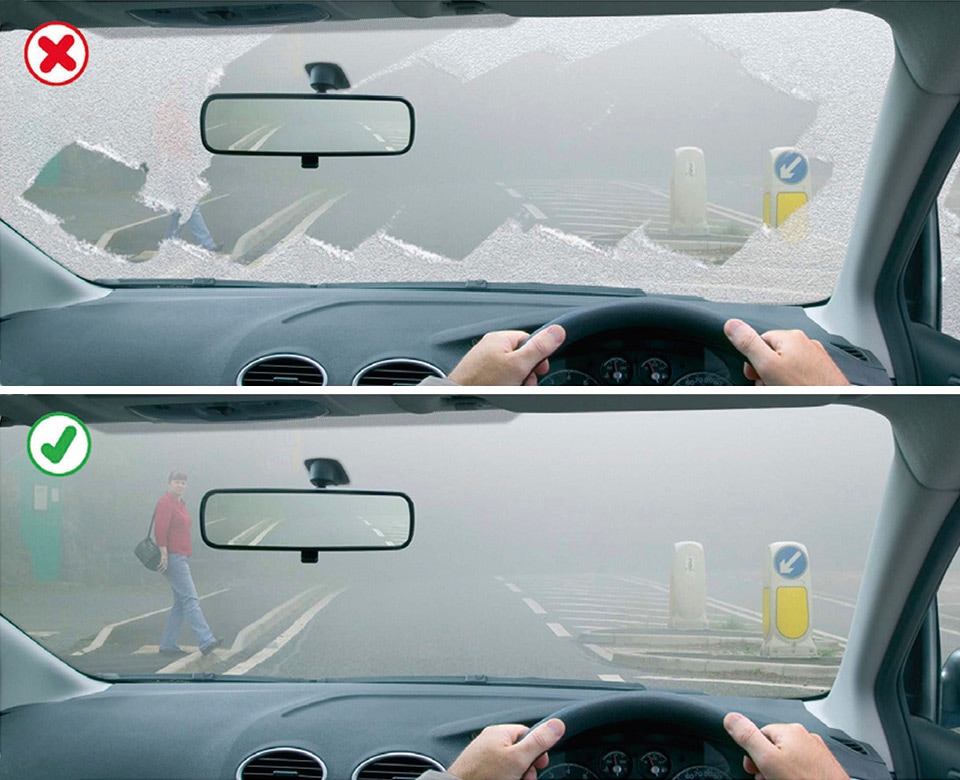
Make sure your windscreen is completely clear
When driving in icy or snowy weather
- drive with care, even if the roads have been treated
- keep well back from the road user in front as stopping distances can be ten times greater than on dry roads
- take care when overtaking vehicles spreading salt or other de-icer, particularly if you are riding a motorcycle or cycle
- watch out for snowploughs which may throw out snow on either side. Do not overtake them unless the lane you intend to use has been cleared
- be prepared for the road conditions to change over relatively short distances
- listen to travel bulletins and take note of variable message signs that may provide information about weather, road and traffic conditions ahead.
Drive extremely carefully when the roads are icy. Avoid sudden actions as these could cause loss of control. You should
- drive at a slow speed in as high a gear as possible; accelerate and brake very gently
- drive particularly slowly on bends where loss of control is more likely. Brake progressively on the straight before you reach a bend. Having slowed down, steer smoothly round the bend, avoiding sudden actions
- check your grip on the road surface when there is snow or ice by choosing a safe place to brake gently. If the steering feels unresponsive this may indicate ice and your vehicle losing its grip on the road. When travelling on ice, tyres make virtually no noise.
Well Done !!!!!
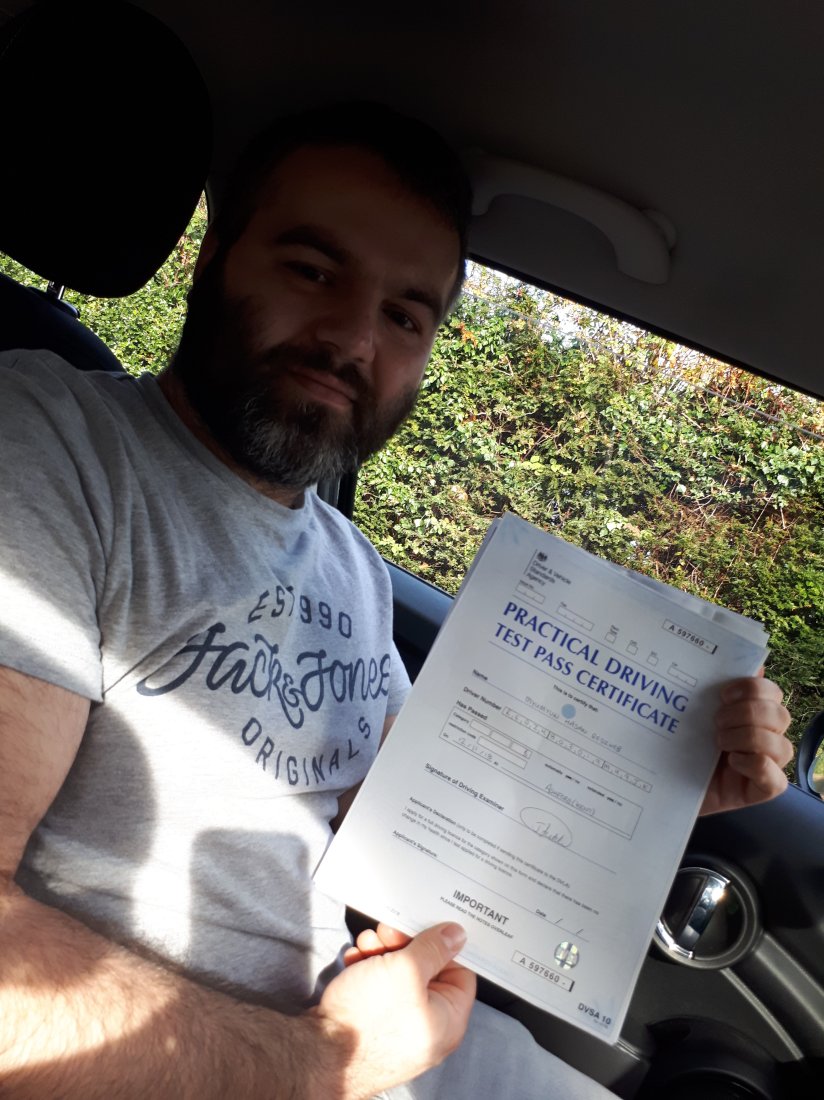
Well done Myumyun for passing your driving test today at Ashford kent test centre.
Well done !!!!!
Well done Jasmine for passing your driving test today at folkestone test centre. 
 LDLT Driving School