Well done Kevin for passing your part 3 test in Eastbourne on the 7th January great start to the year. 😀
Blog
Well Done!!!!!
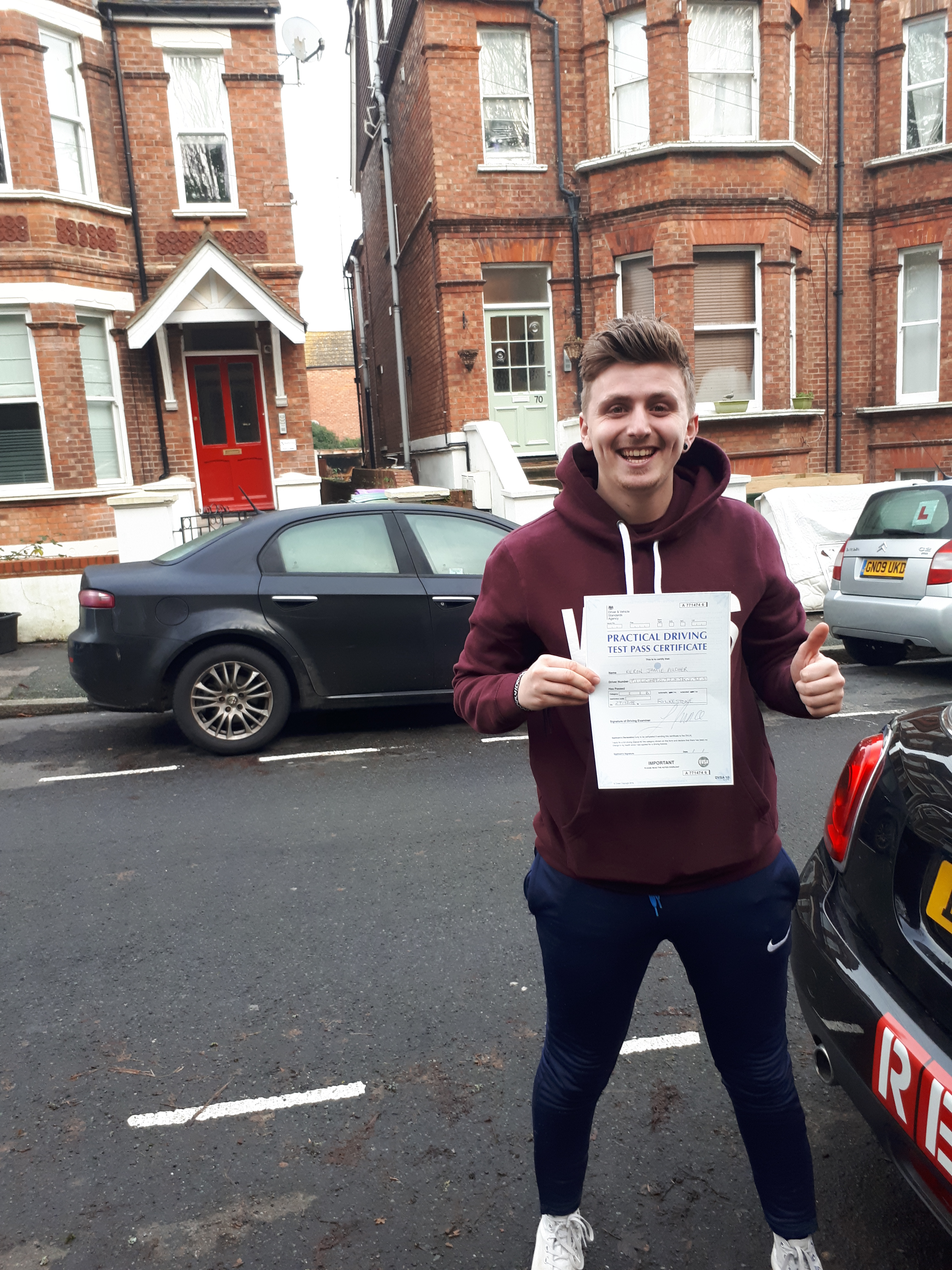
Well done Kieron for passing your driving test today at folkestone test centre 🙂 😁
Merry Christmas
Happy Christmas we hope you all have a wonderful day and please drive safely.
Adi news
Drivers warned over illegal overtaking

Drivers are being reminded that dangerous overtaking can result in points on your licence and a hefty fine.
Motorists who are caught overtaking irresponsibly face on the spot fines of £100 and three penalty points. If police consider it a serious offence, you could be looking at an unlimited fine, nine penalty points and even a driving ban, if you were to go to court.
Drivers are urged to be cautious when overtaking, as doing so recklessly can be extremely dangerous, putting the driver and other road users at risk of collision.
It is stated in the Highway Code that you should never overtake if the road has a single solid white line down the middle, or a double white line with a solid line closest to you. Additionally, drivers should not overtake if it would mean entering into a lane reserved for other road users, for example, buses, trams or bicycles.
The Code also outlines that driver must not overstake in an area marked with ‘no overtaking’ signs, or if the car in front has stopped at a pedestrian crossing, where there may be people in the road hidden from view.
Even if it is legal to overtake, motorists should make sure they are able to pass and re-enter the traffic flow safely without cutting in or causing others to brake suddenly or stop.
Tags:overtakinghighway codeuk road safety





Drink and Drugs
Do not drink and drive as it will seriously affect your judgement and abilities.
In England and Wales you MUST NOT drive with a breath alcohol level higher than 35 microgrammes/100 millilitres of breath or a blood alcohol level of more than 80 milligrammes/100 millilitres of blood.
In Scotland the legal limits are lower. You MUST NOT drive with a breath alcohol level higher than 22 microgrammes/100 millilitres of breath or a blood alcohol level of more than 50 milligrammes/100 millilitres of blood.
Alcohol will
- give a false sense of confidence
- reduce co-ordination and slow down reactions
- affect judgement of speed, distance and risk
- reduce your driving ability, even if you’re below the legal limit
- take time to leave your body; you may be unfit to drive in the evening after drinking at lunchtime, or in the morning after drinking the previous evening.
The best solution is not to drink at all when planning to drive because any amount of alcohol affects your ability to drive safely. If you are going to drink, arrange another means of transport.
Laws RTA 1988 sects 4,5 & 11(2), the Road Traffic 1988 PLSR96
You MUST NOT drive under the influence of drugs or medicine. For medicines, check with your doctor or pharmacist and do not drive if you are advised that you may be impaired.
You MUST NOT drive if you have illegal drugs or certain medicines in your blood above specified limits. It is highly dangerous so never take illegal drugs if you intend to drive; the effects are unpredictable, but can be even more severe than alcohol and result in fatal or serious road crashes. Illegal drugs have been specified at very low levels so even small amounts of use could be above the specified limits. The limits for certain medicines have been specified at higher levels, above the levels generally found in the blood of patients who have taken normal therapeutic doses. If you are found to have a concentration of a drug above its specified limit in your blood because you have been prescribed or legitimately supplied a particularly high dose of medicine, then you can raise a statutory medical defence, provided your driving was not impaired by the medicine you are taking.
Laws RTA 1988 sect 4 & Law RTA 1988 sect 5A
 LDLT Driving School