Blog

Driving Lessons and Instructor Training in Kent England

Space Invaders

Highways England

Stay safe, stay back – that is the message from Highways England today as it reveals the extent – and impact – of tailgating on the country’s major roads and motorways.Published 17 September 2018From:Highways England
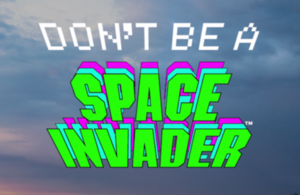
Space Invaders campaign logo

New figures show that one in eight of all road casualties are caused by people who drive too close to the vehicle in front, with more than 100 people killed or seriously injured each year.

While a small minority of tailgating is deliberate, most is unintentional by drivers who are simply unaware they are dangerously invading someone else’s space.

So a safety campaign launched today uses the well-known Space Invader video game character to alert drivers to the anti-social nature and risks of tailgating.PlayRewindForwardMute-Volume Down+Volume Up100%

The timeline slider below uses WAI ARIA. Please use the documentation for your screen reader to find out more.00:00:00

A survey by Highways England reveals that tailgating is the biggest single bugbear that drivers have about other road users. And in-car research – using dashcams, facial recognition, emotion tracking and heart monitors – reveals that a driver’s typical reaction to someone who tailgates them is surprise, anger and contempt, with a spike in heart rate.

Nearly 9 out of 10 people say they have either been tailgated or seen it. And more than a quarter of drivers admitted to tailgating.

The ‘Don’t be a Space Invader – stay safe, stay back’ campaign is supported by one of the world’s best drivers. Former Formula 1 world champion Nigel Mansell, who is President of the Institute of Advanced Motorists RoadSmart, says:

Tailgating is a driving habit I utterly deplore. Not only is it aggressive and intimidating, but it can lead to a crash with a tragic outcome.

There is absolutely no upside to it – you will not get to your destination faster, you are not a skilled driver for doing it, and you are putting so many innocent people at risk. So I very much back this campaign to highlight the dangers of tailgating.
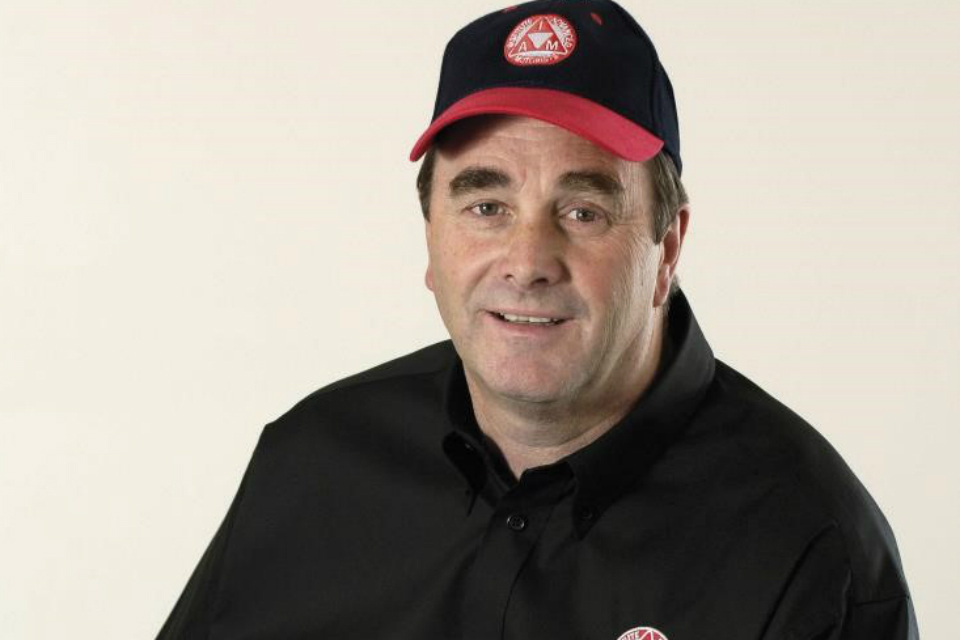
Nigel Mansell
Former Formula 1 world champion Nigel Mansell is backing the campaign

Highways England says good drivers leave plenty of safe space for themselves and others.

Richard Leonard, Head of Road Safety at Highways England, says:

If you get too close to the car in front, you won’t be able to react and stop in time if they suddenly brake.

Tailgating makes the driver in front feel targeted and victimised, distracting their attention from the road ahead and making them more likely to make a mistake.

It is intimidating and frightening if you’re on the receiving end. If that leads to a collision, then people in both vehicles could end up seriously injured or killed. We want everyone to travel safely, so the advice is – stay safe, stay back.

If you wonder whether you are ‘space invading’, then remember the Highway Code, which says that drivers should allow at least a two second gap, which should be doubled on wet roads. If you are tailgated, then avoid speeding up, slowing down or staring in the rear-view mirror. Reduce the risk to yourself by driving normally, signalling clearly and allowing people to overtake.

Being a Space Invader can also cost you money. One insurance company reports that almost a quarter of accident claims between January and August this year involved either a policy holder’s or a third party’s vehicle being hit from behind.

Andy Watson, Chief Executive of insurer Ageas, says:

A bump won’t just damage your vehicle, it’s likely that it will also hit your pocket when it comes to renew your insurance. So we urge all drivers to follow the advice of Highways England and back off from the driver in front.

Thatcham Research are experts in vehicle safety technology, vehicle security and crash repair. Director of Research at Thatcham, Matthew Avery, says:

Tailgating is one of the most dangerous driver behaviours seen on UK roads. Not only does it intimidate others and create ‘phantom’ traffic jams via the ripple effect of sharp braking, it is also a leading cause of accidents. Thatcham Research is proud to offer our full support to this potentially life-saving Highways England campaign.

National Express, which will carry the campaign on some of its long-distance coaches, is among supporters of the campaign that also include the National Police Chiefs Council, leading road safety bodies Brake and the Institute for Advanced Motorists, and the motor insurer Thatcham.

Highways England has a dedicated webpage where drivers can find more information about tailgating and what they can do to stay safe.

General enquiries

Members of the public should contact the Highways England customer contact centre on 0300 123 5000.

Driving Lessons and Instructor Training in Kent England

General advice


You MUST NOT

  • drive dangerously
  • drive without due care and attention
  • drive without reasonable consideration for other road users.

Law RTA 1988 sects 2 & 3 as amended by RTA 1991145
You MUST NOT drive on or over a pavement, footpath or bridleway except to gain lawful access to property, or in the case of an emergency.
Laws HA 1835 sect 72 & RTA 1988 sect 34146
Adapt your driving to the appropriate type and condition of road you are on. In particular

  • do not treat speed limits as a target. It is often not appropriate or safe to drive at the maximum speed limit
  • take the road and traffic conditions into account. Be prepared for unexpected or difficult situations, for example, the road being blocked beyond a blind bend. Be prepared to adjust your speed as a precaution
  • where there are junctions, be prepared for road users emerging
  • in side roads and country lanes look out for unmarked junctions where nobody has priority
  • be prepared to stop at traffic control systems, road works, pedestrian crossings or traffic lights as necessary
  • try to anticipate what pedestrians and cyclists might do. If pedestrians, particularly children, are looking the other way, they may step out into the road without seeing you.
  • Be considerate. Be careful of and considerate towards all types of road users, especially those requiring extra care.
  • you MUST NOT throw anything out of a vehicle; for example, food or food packaging, cigarette ends, cans, paper or carrier bags. This can endanger other road users, particularly motorcyclists and cyclists.
  • try to be understanding if other road users cause problems; they may be inexperienced or not know the area well.
  • be patient; remember that anyone can make a mistake.
  • do not allow yourself to become agitated or involved if someone is behaving badly on the road. This will only make the situation worse. Pull over, calm down and, when you feel relaxed, continue your journey.
  • slow down and hold back if a road user pulls out into your path at a junction. Allow them to get clear. Do not over-react by driving too close behind to intimidate them.   
  • Safe driving and riding needs concentration. Avoid distractions when driving or riding such as
  • loud music (this may mask other sounds)
  • trying to read maps
  • inserting a cassette or CD or tuning a radio
  • arguing with your passengers or other road users
  • eating and drinking
  • smoking

You MUST NOT smoke in public transport vehicles or in vehicles used for work purposes in certain prescribed circumstances. Separate regulations apply to England, Wales and Scotland. In England and Wales, the driver MUST NOTsmoke or allow anyone to smoke in an enclosed private vehicle carrying someone under 18, including motor caravans. In Scotland it is an offence for anyone aged 18 or over to smoke in a private motor vehicle (unless it is parked and being used as living accommodation) when there is someone under 18 in the vehicle and the vehicle is in a public place.​

Mobile phones and in-vehicle technology
You MUST exercise proper control of your vehicle at all times. You MUST NOT use a hand-held mobile phone, or similar device, when driving or when supervising a learner driver, except to call 999 or 112 in a genuine emergency when it is unsafe or impractical to stop. Never use a hand-held microphone when driving. Using hands-free equipment is also likely to distract your attention from the road. It is far safer not to use any telephone while you are driving or riding – find a safe place to stop first or use the voicemail facility and listen to messages later.

You may park your vehicle using a hand-held remote control app or device. The app or device MUST be legal, and you should not put other people in danger when you use it.150
There is a danger of driver distraction being caused by in-vehicle systems such as satellite navigation systems, congestion warning systems, PCs, multi-media, etc. You MUST exercise proper control of your vehicle at all times. Do not rely on driver assistance systems such as cruise control or lane departure warnings. They are available to assist but you should not reduce your concentration levels. Do not be distracted by maps or screen-based information (such as navigation or vehicle management systems) while driving or riding. If necessary find a safe place to stop.

As the driver, you are still responsible for the vehicle if you use a driver assistance system (like motorway assist). This is also the case if you use a hand-held remote control parking app or device. You MUST have full control over these systems at all times.